Why do children play?
Play is essential for a child’s development. It’s not just fun – it’s how children learn about the world, build relationships, and grow emotionally, socially, and physically. As a parent, supporting your child’s play can help them thrive and develop crucial skills, including learning how to identify and manage risks.
What does play help your child do?
Play supports your child’s growth in many important ways:
- Build confidence & social skills: Playing helps children learn how to work with others, share, take turns, and communicate.
- Feel loved, happy, and safe: Play is an enjoyable way for children to bond with you and others, creating a sense of security.
- Improve physical skills: Play helps develop fine and gross motor skills, from running to drawing to balancing.
- Develop language & communication: Through play, children practice using words, expressing themselves, and understanding others.
Why is play important for brain development?
Play is a key driver for your child’s brain development. It gives them a chance to ask questions, solve problems, test ideas, and explore the world in a safe and supportive environment. Play nurtures curiosity and creativity, both of which are vital for cognitive growth.
Different types of play
Unstructured play
This is the kind of play that happens naturally, without planning. It’s driven by whatever captures your child’s interest at the moment. Examples include:
- Building forts or cubby houses
- Playing dress-up
- Exploring new places
Unstructured play encourages creativity, imagination, and independent thinking.
Structured play
Structured play is more organised and typically happens at scheduled times. Examples include:
- Dance or swimming lessons
- Library story time
- Sports or team games
While structured play can teach specific skills, it still offers room for fun and learning.
How play changes as children grow
As children grow, their play evolves and becomes more complex. Here’s how play looks at different ages:
Babies (0-12 months)
Babies love interactions like talking, singing, and smiling. The best “toy” for your baby is you! They learn by mimicking and connecting with you.
Toddlers (1-3 years)
Toddlers are curious little explorers. They enjoy activities like:
- Playing with balls, boxes, or anything that sparks movement and exploration
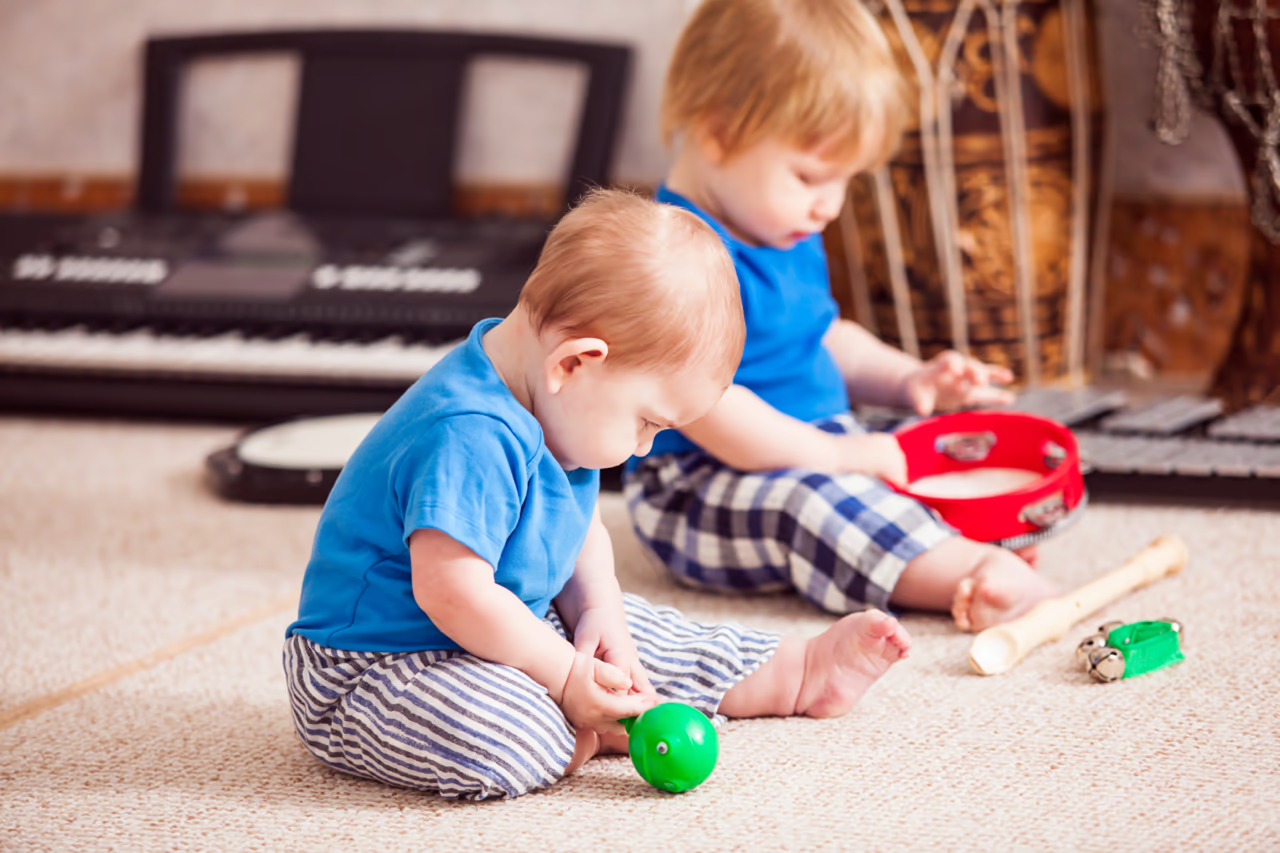
- Listening to music
- Discovering new spaces
Preschoolers (3–5 years)
Preschoolers become more creative and independent in their play. They enjoy:
- Puzzles and drawing
- Playdough and dress-ups
- Activities that challenge their imagination and problem-solving skills
Music, balls, and active play are also great for getting them moving and thinking.