Between 18 and 24 months
At this age, toddlers begin to refine their perception of colors, space, and distances. They can release objects with more precision, allowing them to place items neatly or fit objects together in creative ways. This requires well-developed vision and spatial awareness, which is steadily improving during this stage.
Language explosion
The era of learning words has truly arrived! Toddlers experience a language explosion, rapidly expanding both their understanding of speech and their vocabulary. Their ability to recognise and use words grows dramatically during this time, as they transition from passive understanding to active speaking. Have you noticed your little one suddenly picking up new words every day?
The importance of outdoor play
Time spent outdoors is vital – not just for gross motor skills like running and climbing, but also for developing visual skills. Moving their eyes to track objects and focus on new sights helps improve their visual attention and coordination.
Creativity and scribbling
Toddlers become increasingly interested in making marks and scribbles. They may enjoy drawing with safe tools like chunky crayons or chalk—not just on paper but also on larger surfaces. Encourage this creative exploration! Their tools don’t need to be pencils yet; anything safe and easy to grip will do.
At this stage, toddlers may also begin to distinguish high-pitched melodies from deeper tones, though songs sung in low voices might still sound like simple chants to them.
Adaptation and thinking
A healthy child at 18 months will often
- Enjoy filling and emptying containers with pebbles, sand, water, or small objects, mimicking adult actions like vacuuming, sweeping, or packing a bag.
- Imitate everyday tasks with toys or household objects, such as wiping, hammering, or vacuuming.
- Point to familiar objects in books, magazines, or picture cards when asked, identifying things like cats, houses, or teddy bears with confidence.
Communication and linguistic abilities
- In familiar situations, your child can often figure out what an adult is trying to communicate.
- They understand that every object or phenomenon has a name, which is a key milestone in language development.
- Their passive vocabulary (words they understand but may not yet use) is close to 200 words.
- Girls often have an active vocabulary of at least 50 words at this stage, though boys may develop slightly later — it’s all part of normal development.
- They are beginning to grasp spatial relationships in instructions, such as “Put the ball under the chair!”
- A single spoken word can represent a whole idea or sentence. For example, the word “door” might mean “I see the door,” “I want to go out the door,” or “Someone is at the door,” depending on the context.
- They begin to develop a small set of consistent vocabulary for expressing needs or feelings, such as “give” or “no.”
- Learning about others and about themselves
- The fear of separation (separation anxiety) gradually begins to lessen.
- Your toddler is now capable of taking turns with you in simple games, like peek-a-boo or saying “please” and “thank you.”
- They enjoy mimicking your household actions, such as stirring with a wooden spoon or wiping surfaces.
- They are determined to do certain tasks independently and may insist on trying things on their own.
- They can recognize at least three parts of their own body and will point to or identify body parts when asked.
- During dressing, they cooperate by moving their arms and legs to help you put on or take off clothing.
Physical development and movement
- Your toddler can squat down without holding onto anything and stand back up from this position.
- They can bend down to pick up objects from the ground without needing support.
- From a standing position, they can throw a ball with increasing control.
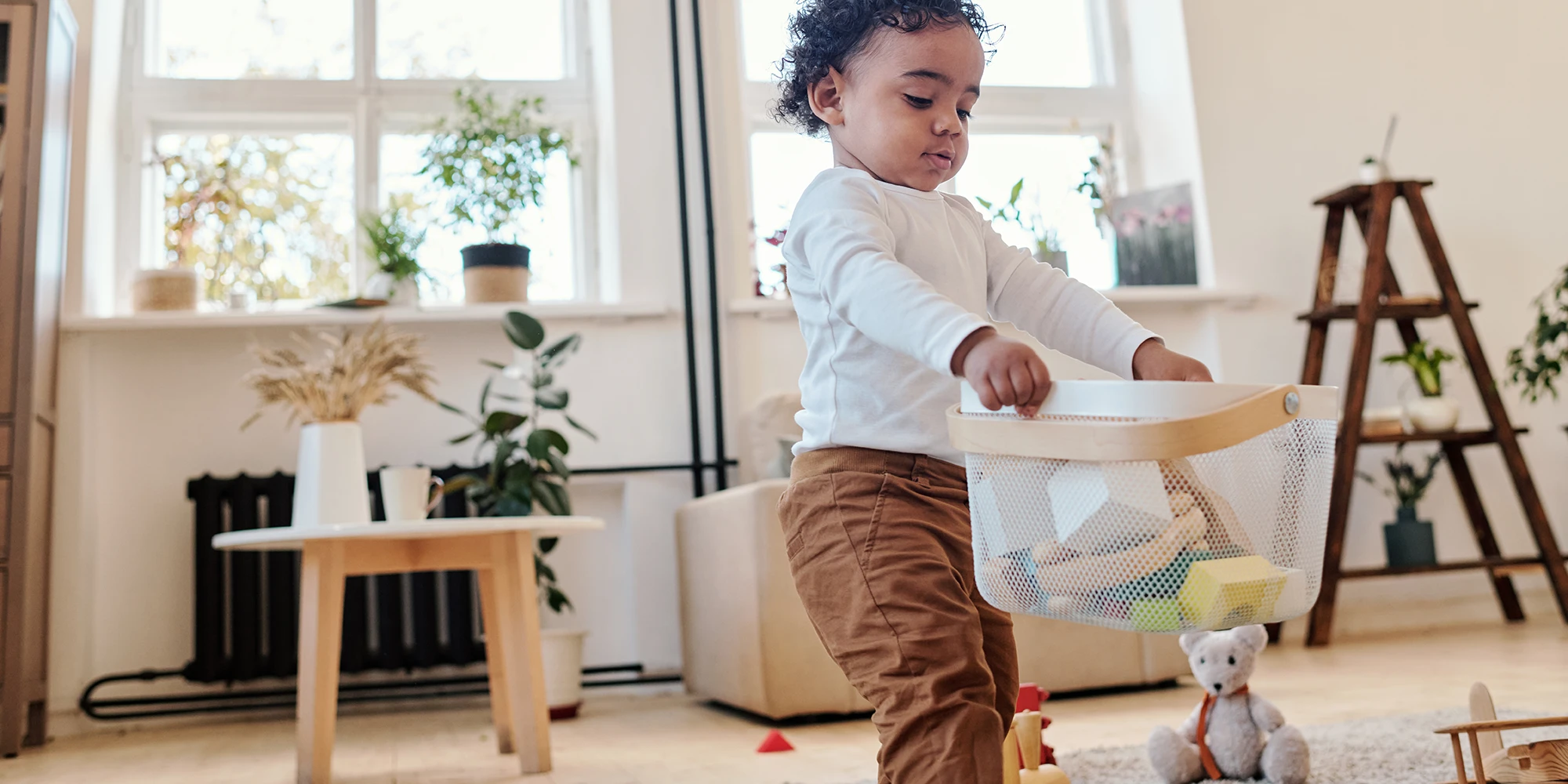
- They are able to walk while pulling or carrying an object, showing improved coordination.
- They can take a few steps backward or sideways, demonstrating greater balance and agility.
- They might run toward stairs with excitement, though climbing requires supervision.
- They can climb onto furniture or navigate stairs independently, often testing their growing strength and confidence.
Self-service skills
- Your toddler can indicate when they need to pee or poop.
- They chew food more effectively, showing better oral coordination.
- They’re starting to use a spoon during meals, though they still make a mess and might prefer to use their hands.
- They can take off simple, removable clothing, like a hat or socks.
- During bath time, they may help by washing their tummy and trying to use a toothbrush on their own.