Why is foot care important for my child?
Children’s feet are always growing. The last bone in a child’s foot only begins to form at around 3 years old. It’s important to care for your child’s feet so that they stay healthy as your child grows.
There is a lot you can do to help keep your baby’s feet in good condition.
Most little ones start walking sometime between 10 and 20 months, but it’s important to remember that every child is different! Some babies are ready to take those first steps sooner than others, both physically and emotionally.
The best way for your child’s legs and feet to develop is at their own natural pace. There’s no need to rush them! And you definitely don’t need a baby walker or jumper – they’re not necessary and can actually make learning to walk more difficult, not to mention they can be a tripping hazard.
When your child first starts to walk, they may tend to:
- walk on their tippy toes
- with their toes pointing inwards or outwards
This is quite common, and most children grow out of it.
Why are bare feet good for my baby?
- Research shows that it’s best for babies and toddlers to be barefoot as much as possible.
- Being barefoot allows for optimal foot development, improves agility, strengthens children’s awareness and balance on various surfaces, and boosts sensory-motor development.
- At birth, the bones in your baby’s feet are soft. As he grows, the bones harden and the joints, ligaments and muscles in his feet develop.
- When toddlers walk barefoot they tend to look up because the information they receive through their feet orients them and makes them feel secure.
- Barefoot steps also boost coordination because they send messages to a child’s brain about how to organise his movement patterns and effectively navigate his body through space.
- Being barefoot not only frees children to look up and around rather than at the floor, but also helps them learn to safely traverse different surfaces. Walking and running barefoot on hard floors, sand, grass, mud and the like gives children confidence to manoeuvre their bodies in different settings. Research has even suggested that being barefoot correlates with being less prone to injury.
- There are as many as 200,000 nerve endings in the sole of one foot! Even before learning to stand and walk, being barefoot teaches babies about their bodies and their surroundings.
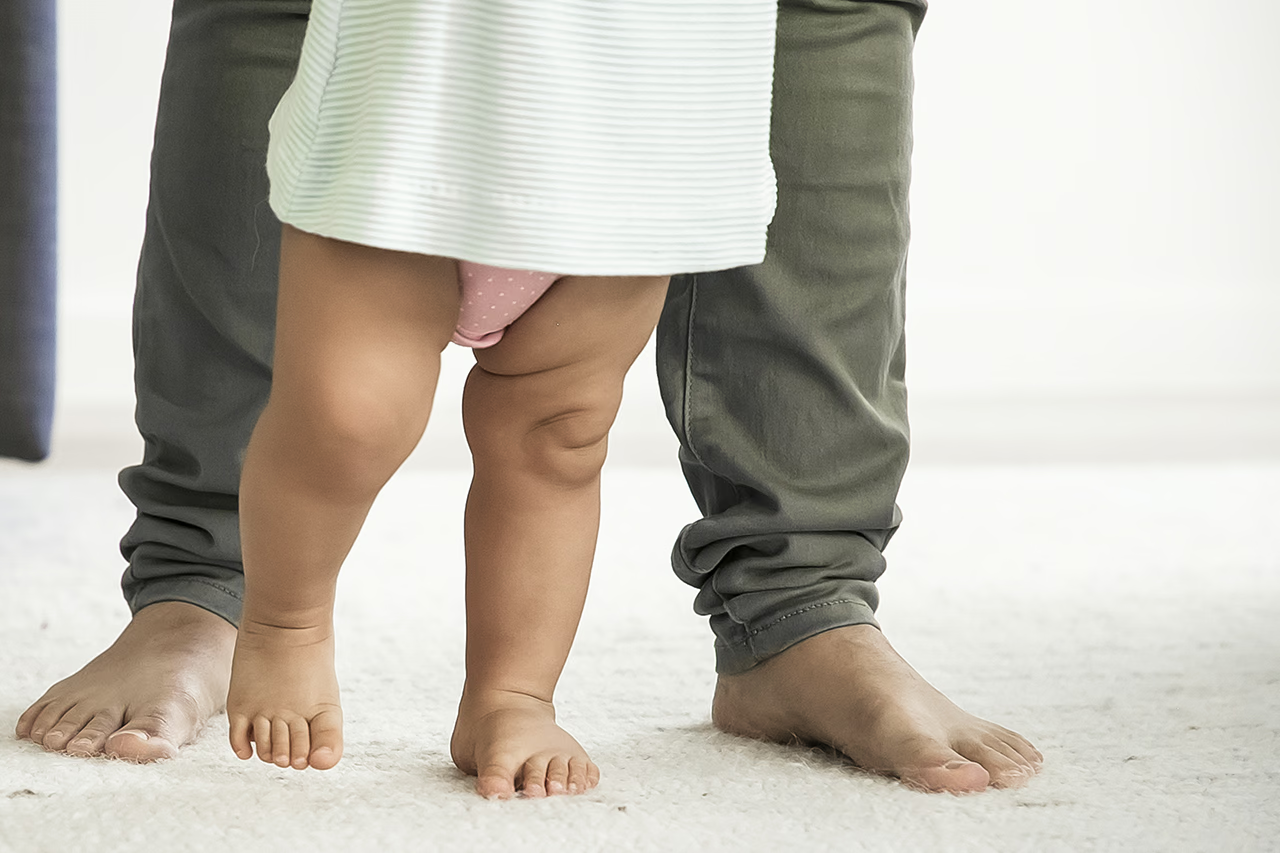
Baby shoes are everywhere these days – it’s a huge market. Those tiny versions of Dad’s sneakers might look adorable, but research actually suggests that going barefoot is best for babies (and even older kids!) whenever possible.
Of course, kids do need shoes sometimes. City sidewalks and rainy weather aren’t exactly barefoot-friendly:) But in warm homes, on playgrounds, and even when splashing in mud puddles, letting those little feet roam free is a great idea.