Are babies born with emotions?
Yes!
Pinning down exactly what a baby is feeling is difficult, simply because they can’t explain it to us. Still, researchers have used observation and interpretation to study infant emotions and most agree that babies are born with the basic emotions of pleasure and distress, but not an understanding of them. Varied emotions and understanding what they mean evolve as the child’s memory and cognitive abilities develop and their experiences become more complex.
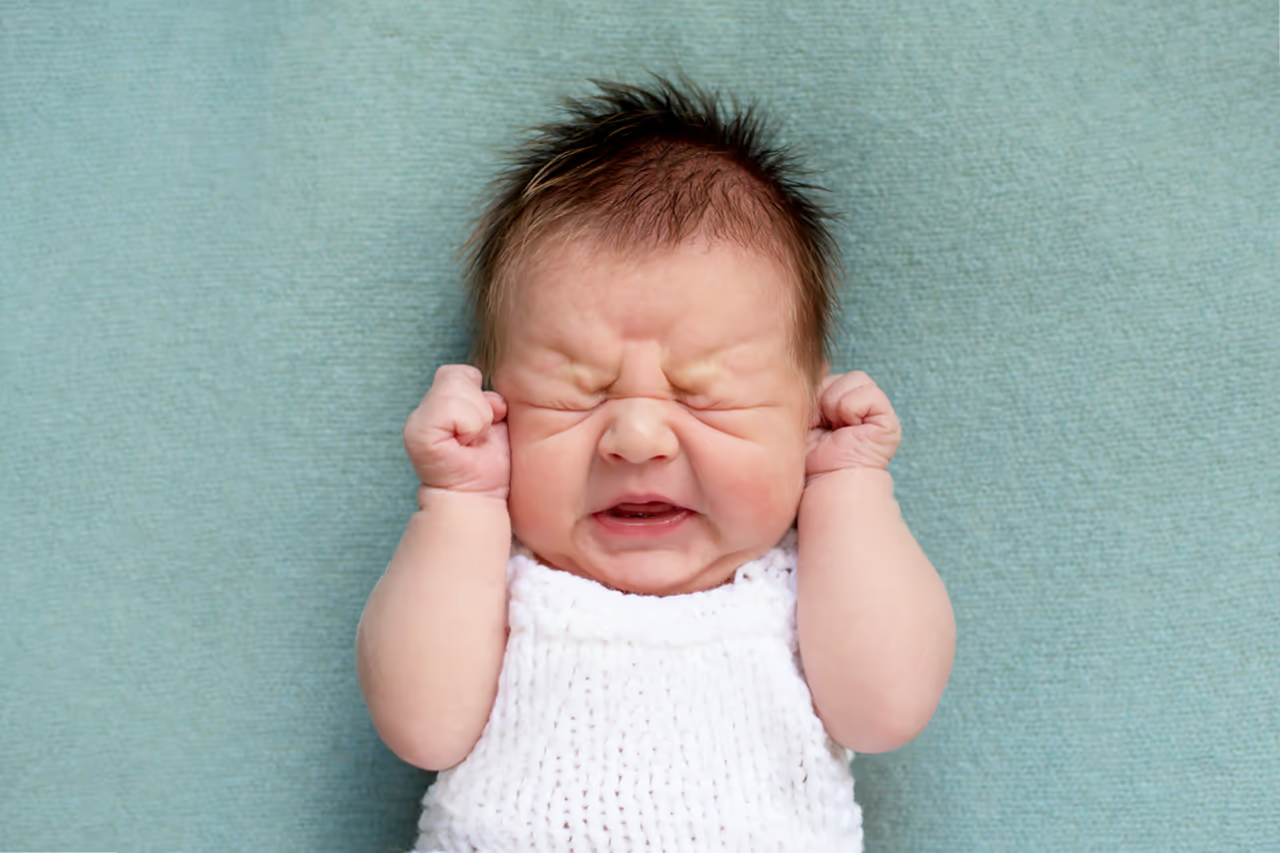
For the first 6 months, your baby will express emotion based on how they are feeling in the moment, without understanding why. At first, their emotions are simple: pleasure and displeasure. When they are content, they may coo, or when they hear your voice, they may wave their arms and breathe heavily. If they’re wet, cold, tired, or hungry, they will cry. Their face will reflect their mood as they move their mouth, eyebrows, and forehead depending on how they’re feeling.
By month 3, they’ll be smiling, showing pleasure in response to you or toys, and by 4 months, their shows of positive and negative emotion intensify as they start laughing or crying in response to your actions (you tickle them, they laugh, or you stop playing with them, they cry).
As they near 6 months, they’ll likely be moody, jumping from pleasure to displeasure from one minute to the next.
At 7 months, a shift occurs with a leap in cognitive development. Baby realises for the first time that they are separate from you. This leads to a new emotion: fear. They may express fear in the presence of strangers, or when they’re away from you or other caregivers. Another new emotion emerges as well: anger. Until now, if they appeared angry, it was simply an expression of displeasure with no meaning behind it. Now that they have an understanding of cause and effect, they learn that anger can be useful: They drop a toy, you don’t pick it up, they get angry, you respond.
“Social referencing” also appears, as your baby gains the ability to recognize others’ emotions and consciously react to them. They may see something on the floor that interests them, and look at you to gauge from your expression whether it’s okay to touch it. Or they may see you laughing and start laughing too.
From 8-11 months, your baby’s awareness of and ability to express a variety of emotions will increase. They’ll become more sensitive to approval and disapproval of others, including feeling guilty when they do something they’re not supposed to. Separation anxiety usually peaks now, and may remain for the next several months.
At 12 months, your baby’s emotional development enters a new phase as their expressive language becomes dotted with true words and they can label how they are feeling.