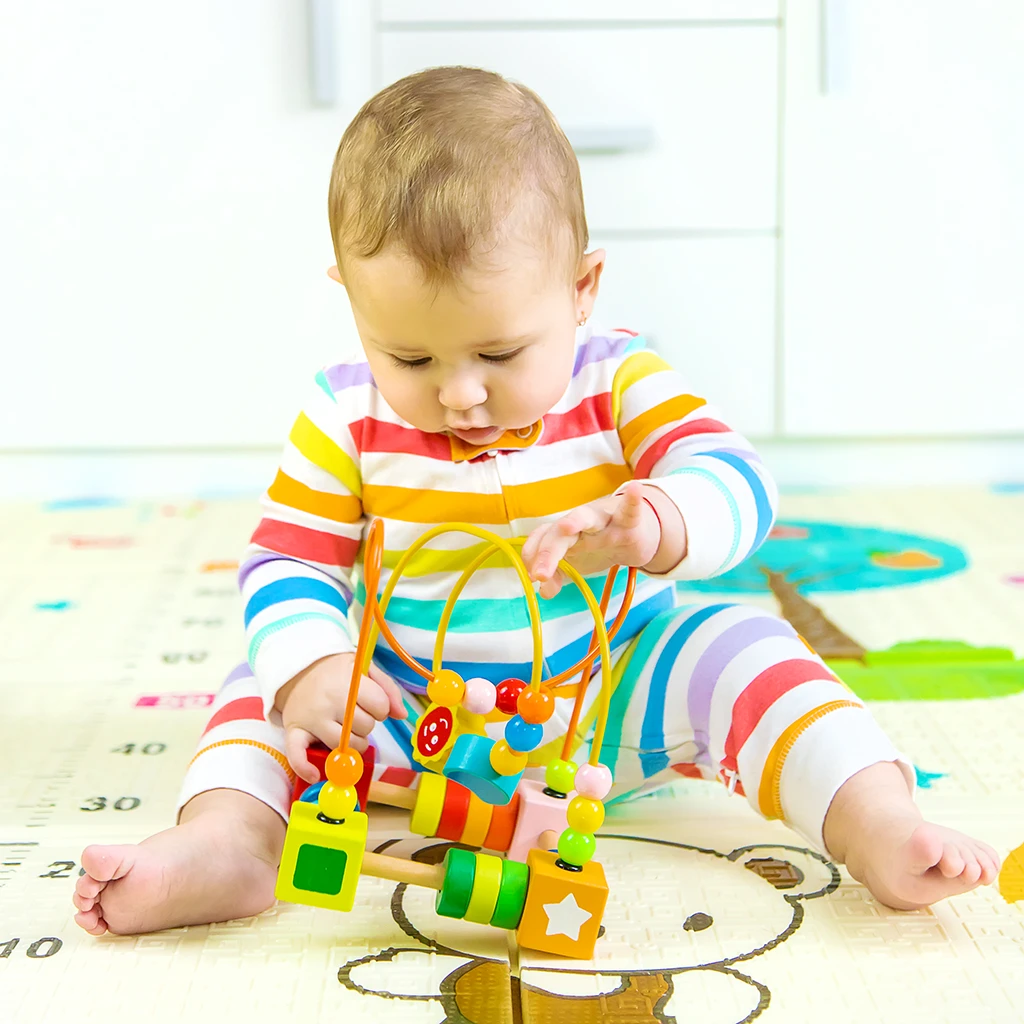
Hand-eye coordination is the ability to use what you see with your eyes to guide your hand movements. It’s a skill that develops gradually as babies grow, and it’s super important for all kinds of activities, like reaching for toys, picking things up, and eventually even writing and drawing when they’re older.
Why Is hand-eye coordination important?
- Everyday tasks: Hand-eye coordination is involved in so many everyday tasks, from eating to playing. As babies develop better hand-eye coordination, they can do things like hold a bottle, grab food, play with toys, or even start learning to use utensils.
- Learning and play: Babies learn a lot through play, and good hand-eye coordination helps them explore the world around them. Grabbing and manipulating toys helps babies understand shapes, sizes, and textures, and it encourages curiosity and problem-solving.
- Social development: Good hand-eye coordination also supports social skills. For example, babies start to be able to pass toys to others, clap their hands, or play simple games like “peekaboo.” These activities help babies bond with you and learn social cues and emotional connections.
- Building strength for future skills: As babies improve their hand-eye coordination, they develop the foundation for skills they’ll use as they grow, like drawing, writing, cutting with scissors, and even playing sports.