At six months old, your baby is growing, learning, and developing at an incredible pace! It’s a magical time when so many of their skills – physical, emotional, and social – start to come together. As a parent, it’s a joy to watch your little one’s progress and to see the exciting changes that are just around the corner.
Physical development
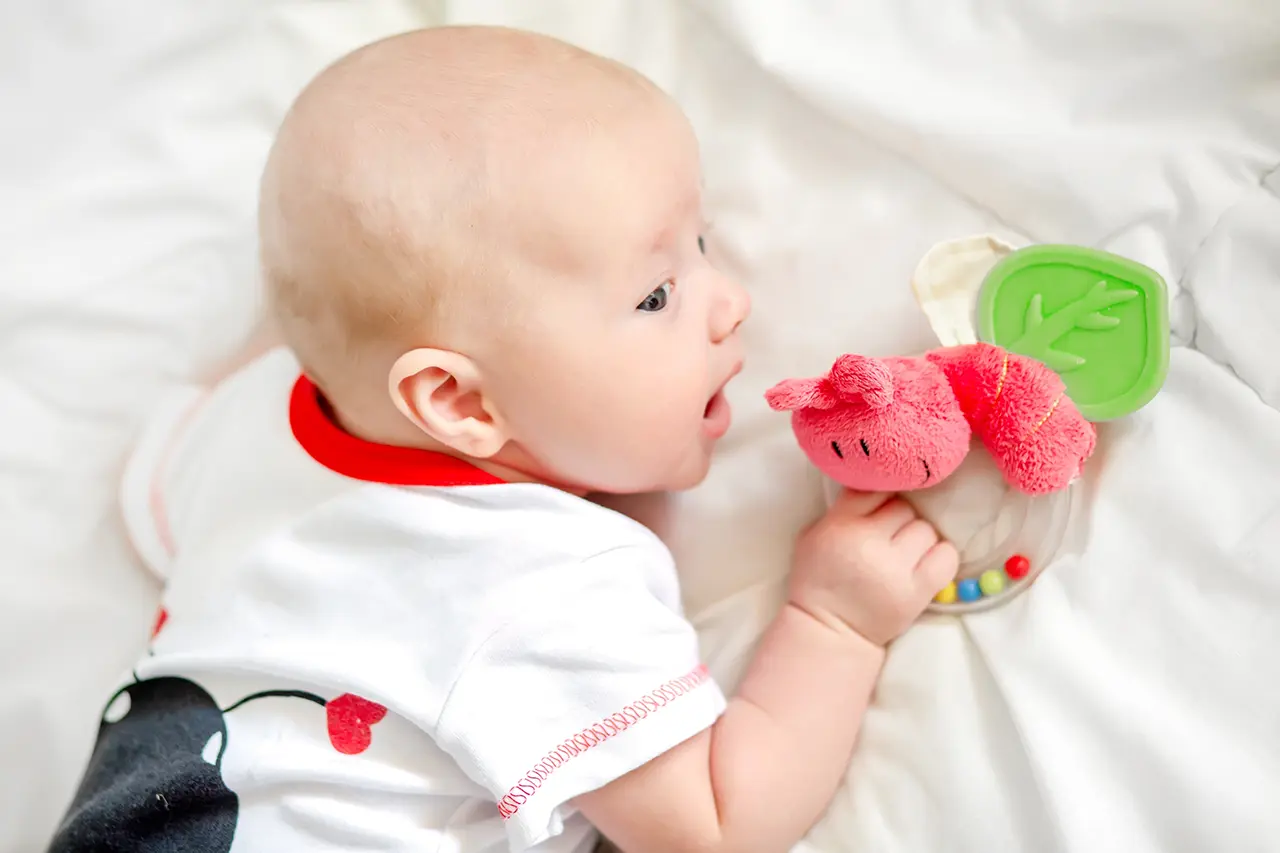
Your baby’s body is becoming more coordinated every day. The left and right sides of their brain are now working together more effectively, helping them control their movements with greater precision. This is why you’ll notice your baby deliberately moving their hands and legs. For example, they might reach for a toy and bring it to their mouth with ease – something that seemed impossible just a few months ago!
Mobility is another big milestone at this age. Many babies can roll over in both directions now, which means you’ll need to be extra cautious about keeping them safe. Always supervise them on high surfaces like changing tables or beds and make sure they’re in a secure spot during playtime.
Some babies might even start practicing for crawling! You may see them pushing up onto their hands and knees and rocking back and forth as if gearing up to take off. While not all babies crawl at six months, some will find creative ways to move, whether it’s rolling, scooting, or even pushing themselves backward. Every baby is different, and this stage is all about experimenting with movement.
Emotional and social growth
At six months, your baby is starting to understand themselves as a separate little person. This emotional development is exciting but can also bring moments of shyness or anxiety around unfamiliar people. They’re developing stronger attachments to you and their other caregivers, so don’t be surprised if they show preference for familiar faces.
Your baby is also becoming more attuned to communication. They may recognize simple words or their name and respond to the tone of your voice. You’ll notice they react differently to happy, soothing tones versus stern or upset ones, showing their growing understanding of emotions and social cues.
Curiosity and exploration
Your baby’s curiosity is in full swing! They’re busy exploring the world with their hands and mouth, their primary tools for learning. Toys are especially fascinating now – they’ll spend time turning them over, feeling textures, and even shaking them to see what happens. Their improved hand-eye coordination means they can pick up smaller objects, like a tiny piece of cereal, with greater accuracy.
If they drop something, they’ll search for it with their eyes and might even try to retrieve it. This is a sign they’re starting to understand cause and effect and the concept of object permanence – the idea that things exist even when they can’t see them.

Sitting and solid foods
Around this age, many babies begin sitting up with some support, such as leaning against pillows or with your steady hands. While they might not sit independently just yet, they’re building the strength and balance needed to get there soon.
Perhaps one of the most exciting milestones at six months is the introduction of solid foods! Many babies are ready to explore single-ingredient purees, like sweet potatoes, peas, apples, or rice cereal. It’s a messy but thrilling time as they discover new tastes and textures. Start slowly, and keep an eye out for any signs of allergies. Remember, breast milk or formula will still be their primary source of nutrition for now, with solids as a supplement.

- Don’t seem to recognize parents or familiar caregivers.
- Show no interest in exploring their surroundings or reaching for objects.
- Haven’t started babbling or making any vocal sounds.
- Avoid eye contact entirely.
- Cannot be comforted by a parent or close caregiver when upset.