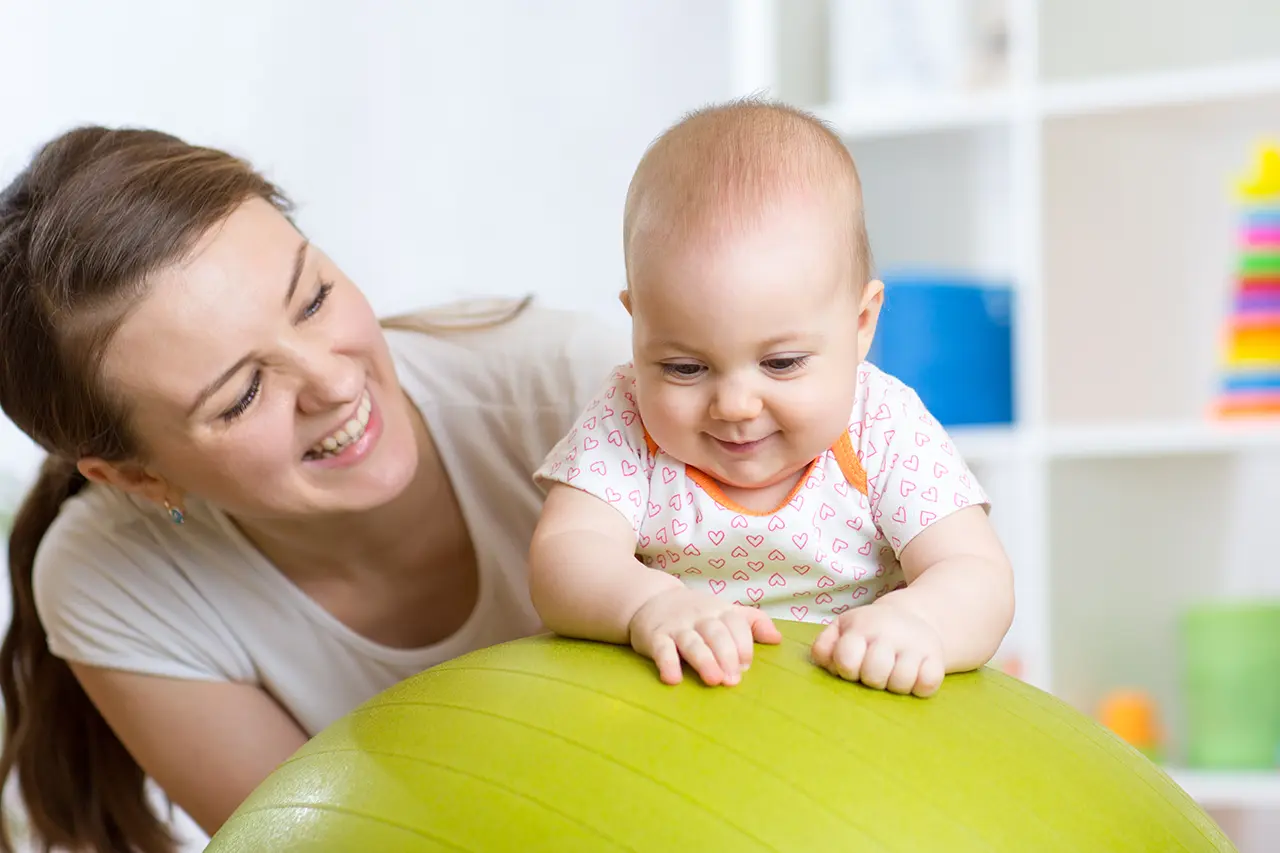
Your baby is on the move! By now, many babies are crawling confidently, rolling across the room, and even managing to carry a toy while they’re on the go. They’re learning to push up onto all fours from their tummy and might rock back and forth in preparation for crawling. From this position – or even while lying on their side – some babies are figuring out how to sit up and play with both hands. It’s such an exciting stage of growth!
Playtime fun
At this age, your little one loves toys that make noise. Banging two objects together or shaking a rattle provides endless entertainment. The ground is the best place for them to play, as it’s safe and gives them plenty of room to move and explore.
Here’s a fun tip: instead of placing all their toys within reach, put a few just slightly out of reach in different directions. This will encourage your baby to start crawling. Their movements might look a bit uneven or uncoordinated at first, but soon they’ll develop a smoother hand-and-knee rhythm.
Developing fine motor skills
Your baby’s fine motor skills are improving quickly! They’re learning to pick up objects with one hand and even pass them from hand to hand. Many babies can now sit unsupported, which gives them a new perspective on the world around them. While they’re getting steadier, it’s a good idea to have cushions nearby – just in case.
This is also the perfect time to baby-proof your home if you haven’t already. Your curious little explorer will love bouncing, crawling, and reaching for anything that catches their eye.
Big steps in learning
Your baby’s memory is growing, too! They might look for an object that’s been covered or dropped, showing they’re starting to grasp the concept of object permanence. Toys like jack-in-the-boxes, pop-up books, or peek-a-boo games will delight them as they begin to anticipate what’s coming next.
Around this time, you might notice your baby testing boundaries, like refusing to follow simple instructions. This isn’t misbehavior – it’s a normal part of their development as they learn about independence and cause and effect.

- Aren’t trying to make sounds or babble.
- Don’t respond to familiar voices, sounds, or faces.
- Haven’t started rolling over during play (from front to back and back to front).
- Don’t play with their feet or transfer objects between their hands.